
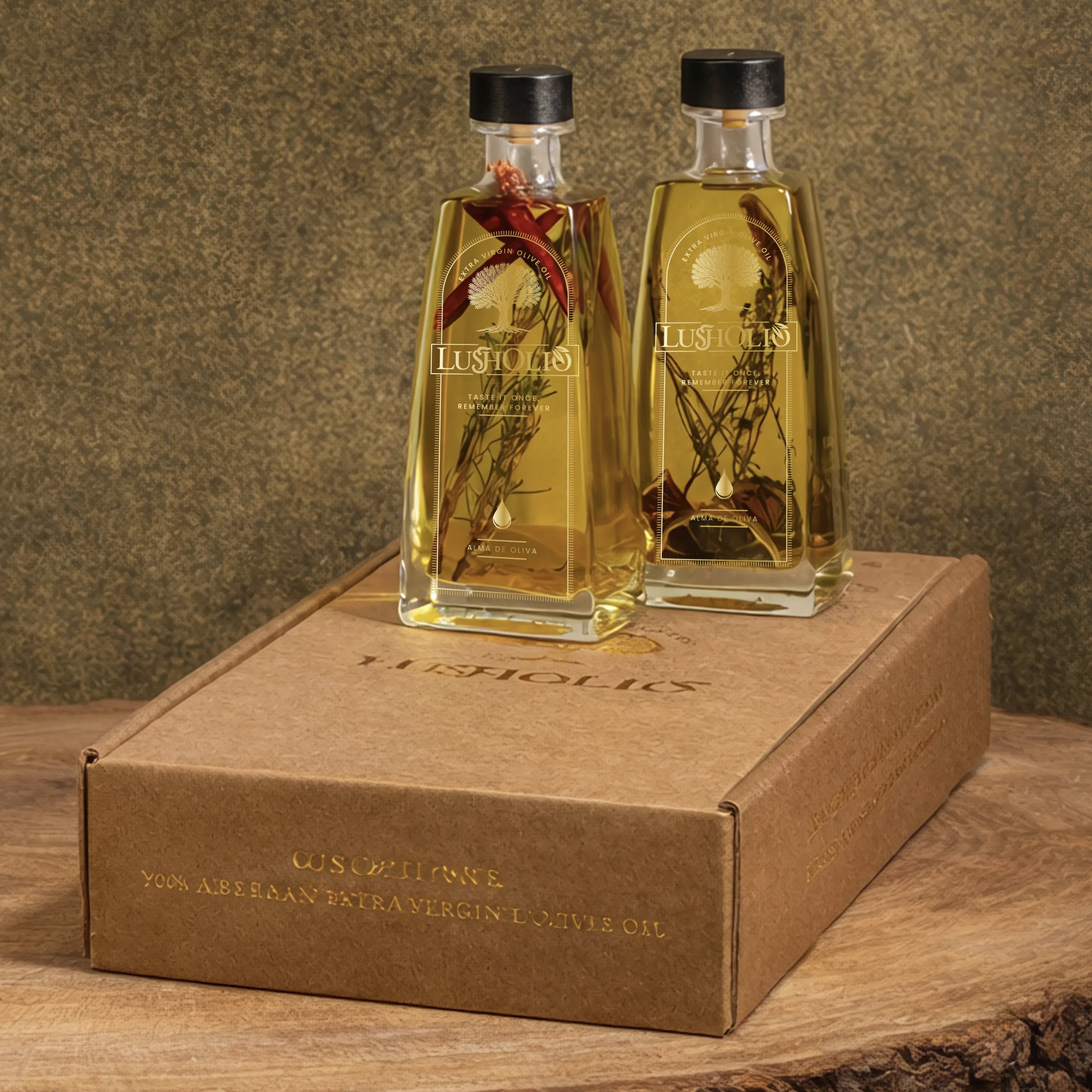
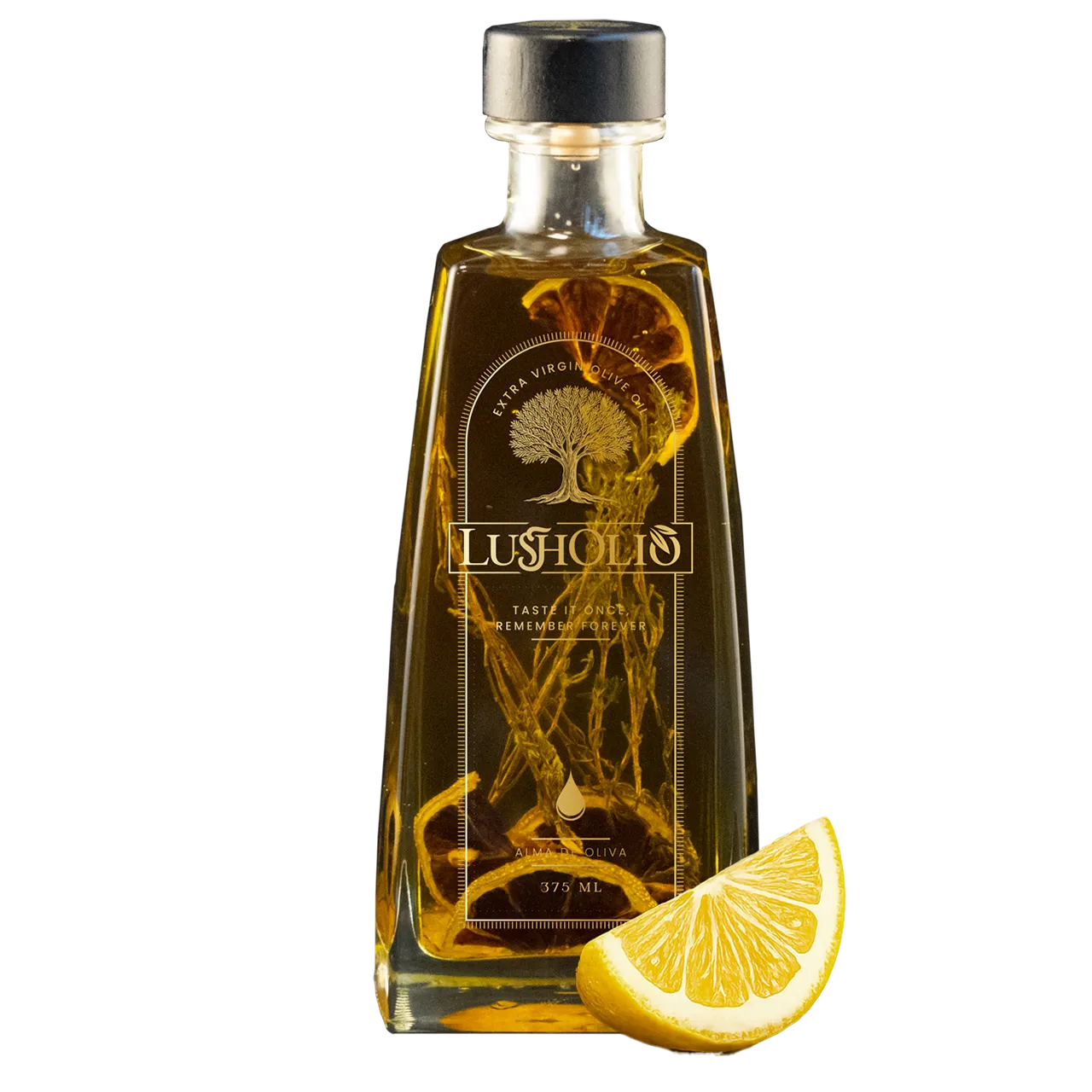
Bright and refreshing with a citrus lift and soft herbal depth.
INGREDIENTS
Extra virgin olive oil, lemon, thyme, garlic
Best with:
- Salads
- Grilled fish
- Fresh bread
- Burrata
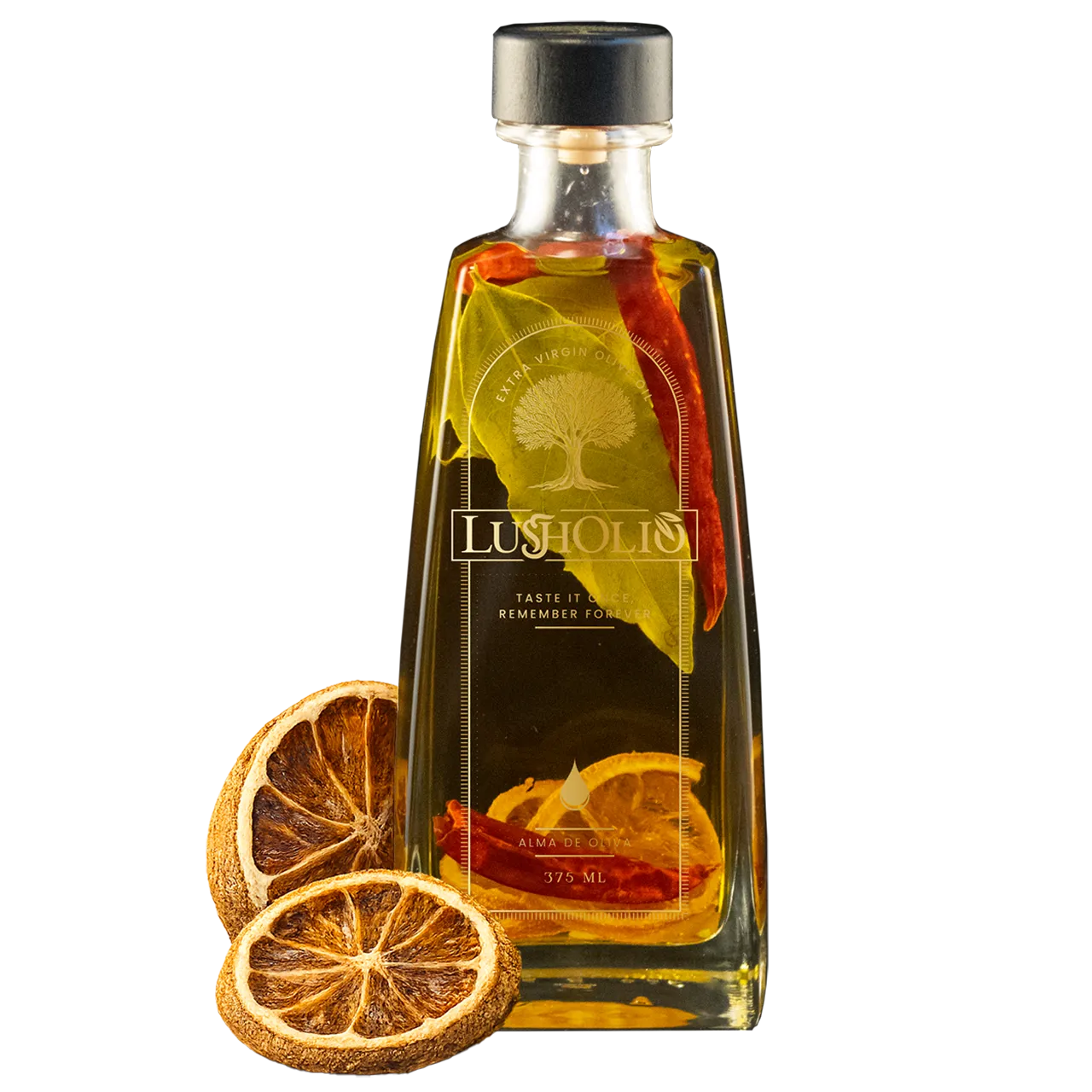
INGREDIENTS
Extra virgin olive oil, orange, bay leaf, Spanish pepper
Warm and vibrant with a subtle Mediterranean heat.
Best with:
- Grilled vegetables
- Roasted dishes
- Pasta
- Seafood
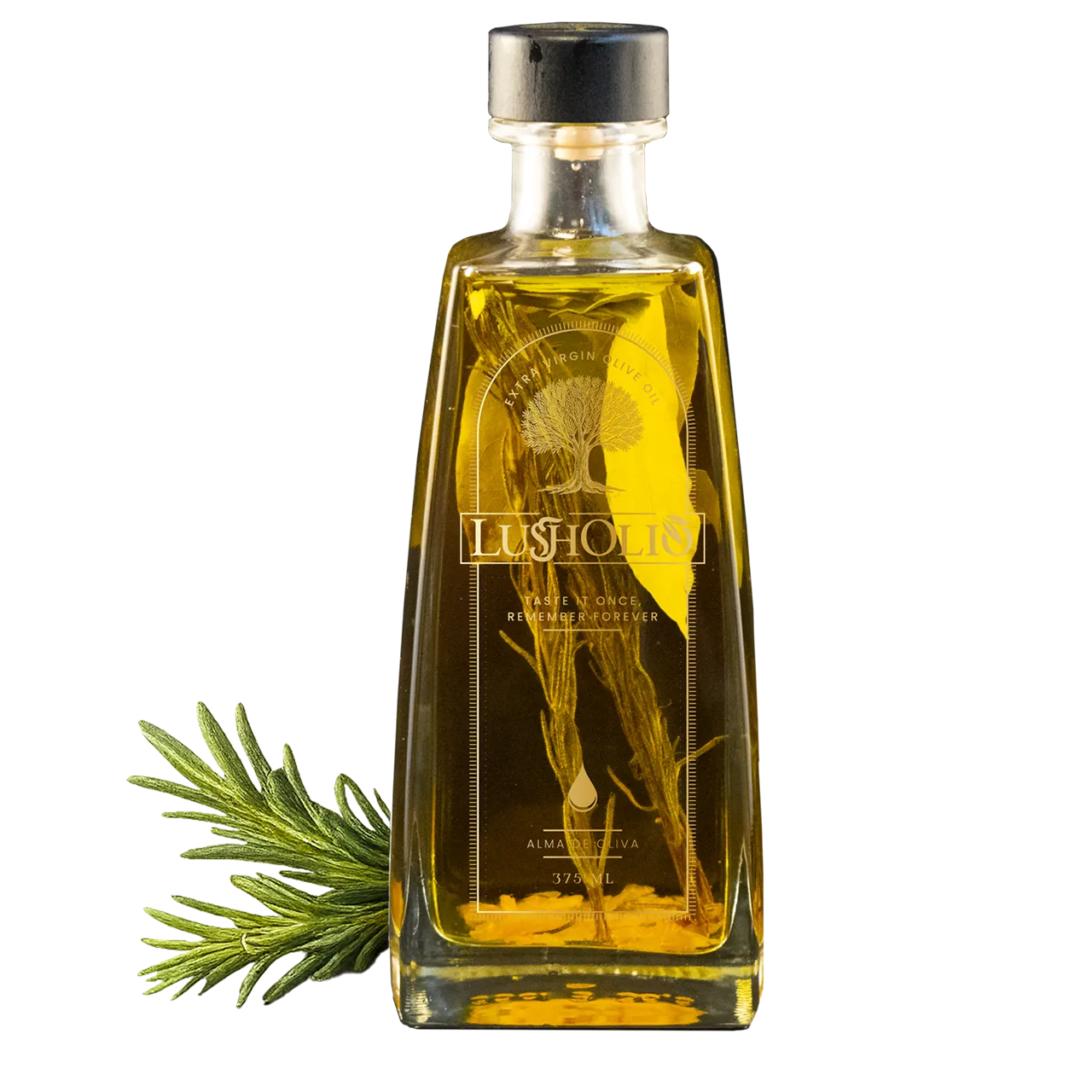
INGREDIENTS
Extra virgin olive oil, rosemary, garlic, bay leaf
Earthy, aromatic and full-bodied.
Best with:
- Meats
- Oven dishes
- Focaccia
- Dipping
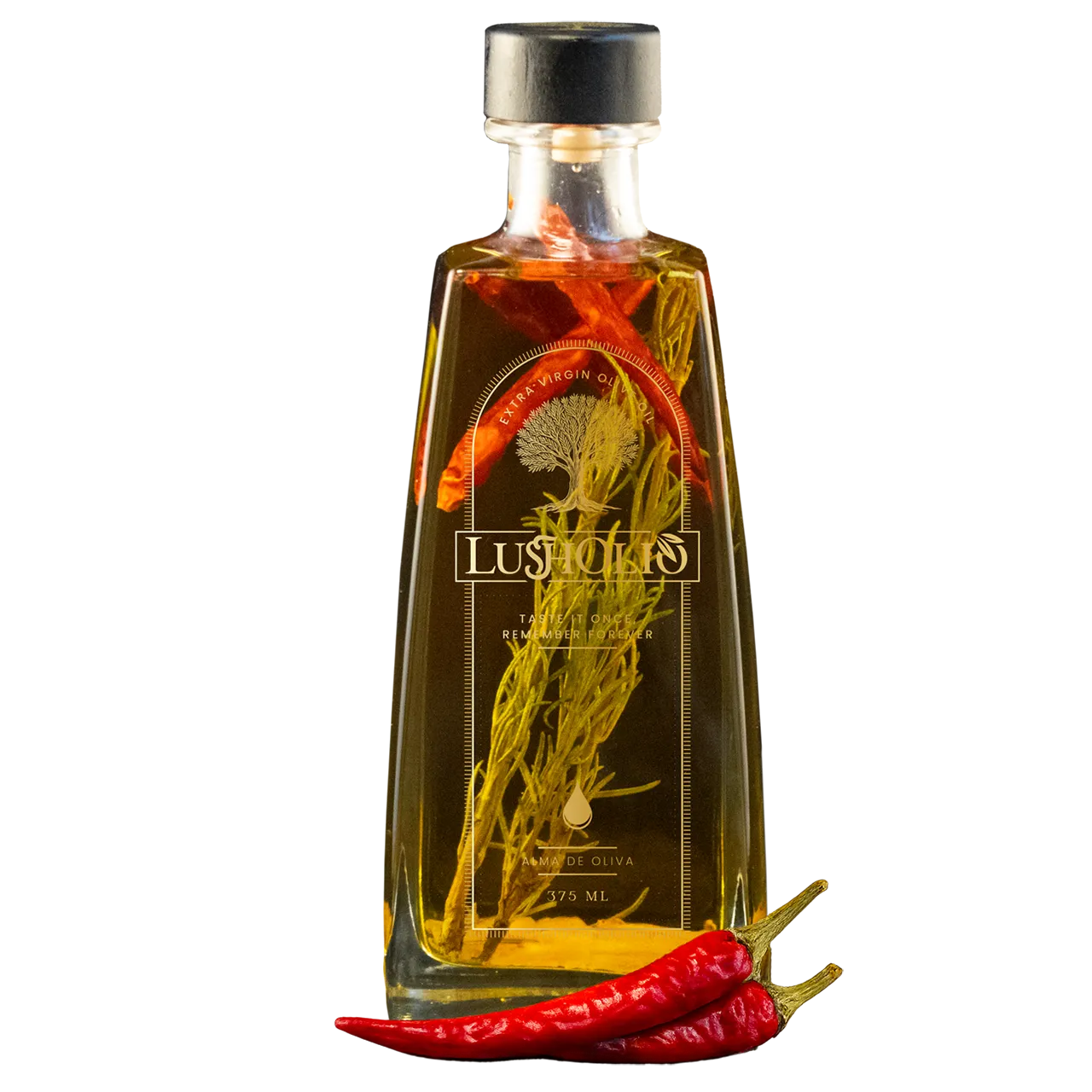
INGREDIENTS
Extra virgin olive oil, Spanish pepper, garlic, rosemary
Bold and expressive with a refined heat.
Best with:
- Pizza
- Pasta
- Grilled meats
- Tapas
An indicator of proper processing of fresh olives. Low values confirm good production standards.
Peroxide values measure oxidation. Low values indicate stability and minimal aging.
Up to 18–24 months after harvest when stored properly.
Curated sourcing. Early harvest. Cold extraction. Laboratory verified.
Made to be tasted – not just used.
Early harvest yields less oil but a higher concentration of flavor and antioxidants.
Quality requires precision, speed, and care – not mass production.
- Low acidity
- Harvest date
- Cold extraction
- Light bitterness and a peppery finish
- Transparency about analysis
Acidity indicates the amount of free fatty acids present. Low acidity points to healthy olives and rapid processing after harvest. Our oil is well below the EU limit of 0.8%.
Extra virgin means the oil is mechanically extracted without chemical processing and meets strict European quality standards. It is the highest quality category of olive oil.
Yes. High-quality extra virgin olive oil is suitable for both cooking and cold use.
Its stability depends on freshness, quality, and low acidity — not marketing claims.